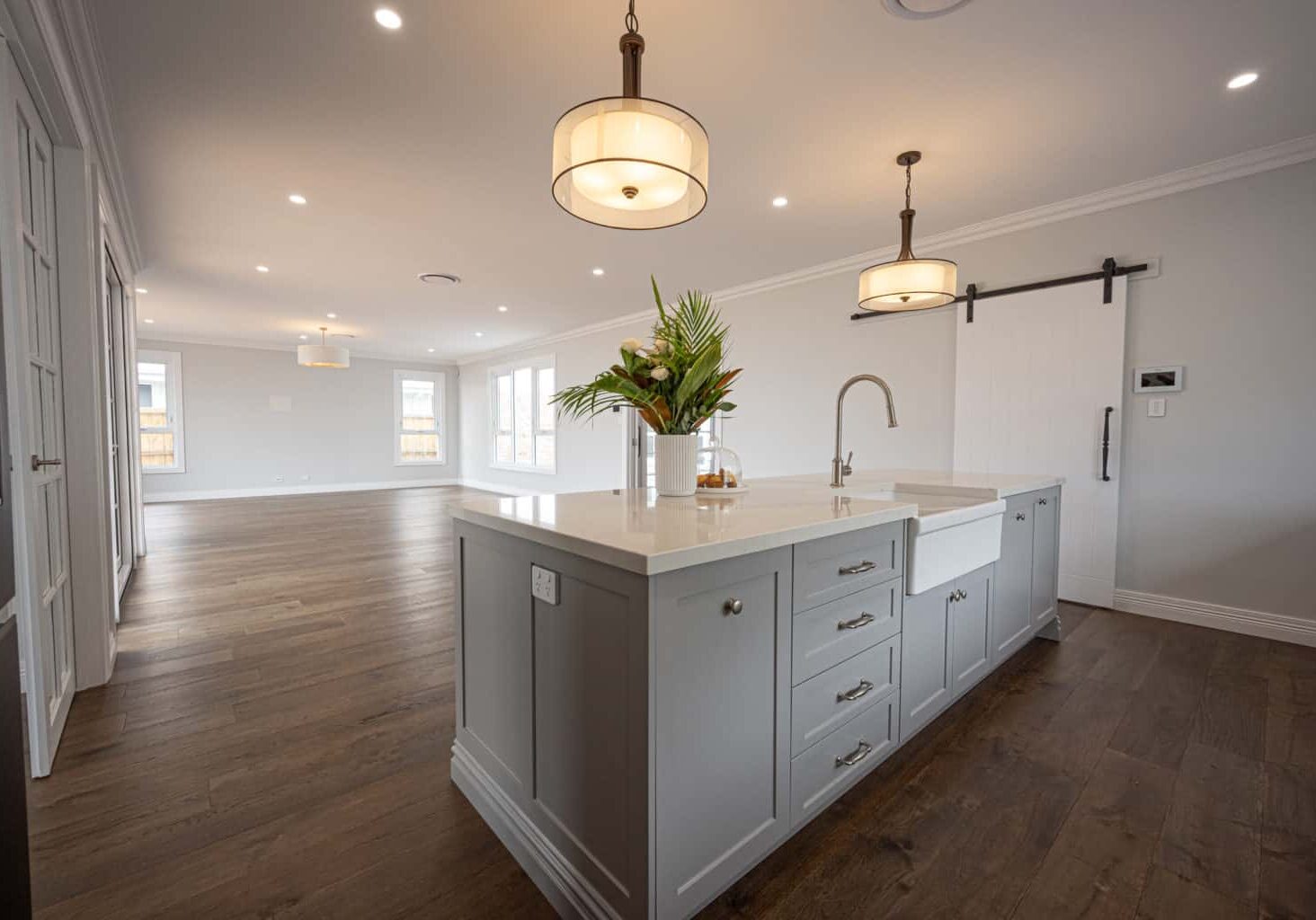
No. The designs on our site are there for ideas, not to pick from. We have not built any of them exactly as shown, and eight or nine in ten of our clients start from a blank canvas. Nothing on our website is a catalogue. It is a conversation starter.
That surprises people, because most builder websites are set up like menus. You scroll, you pick, you build. That model works for volume builders, and there is nothing wrong with it if a set design at a set price is what you want. But it is not how custom building works, and pretending otherwise would be doing you a disservice. A custom home starts with two things a website can never show you: your block, and the way your family actually lives.
Here is how the designs are meant to be used. Scroll through them the way you would scroll through a saved folder of ideas. Notice what keeps catching your eye. Most people take the kitchen from one design, the layout from another and the look of a third, and we combine those into a home that is built once, just for you, and will never be built again. That mix and match instinct is exactly right. Lean into it.
When you tell us you love a particular design, the first thing we will ask is what it is you actually love about it. That question matters more than it sounds. Sometimes it is the open plan living. Sometimes it is where the bedrooms sit in relation to each other. Sometimes it is nothing to do with the floor plan at all, and it is simply the front of the house, the facade, the feel of it from the street. Once we know which element is doing the work, we can carry that idea into a design that fits your land, rather than forcing a whole floor plan onto a block it was never drawn for.
And that is the real reason we ask you not to fall in love with a design before anyone has looked at your block. A design that suits a wide, flat block can be completely wrong on a narrow or sloping one. A floor plan drawn for a north facing backyard can put your living areas in shadow on a south facing block. Setbacks, easements, estate guidelines and the fall of the land all shape what should be built, and none of them are visible in a gallery image. The design has to suit the land, not the other way around. Get that order right and everything downstream gets easier, including the price.
There is a practical benefit to starting from a blank canvas too, and it is one most people do not expect: it is not slower, and it does not have to cost more than bending an existing design out of shape. Reworking a fixed plan to suit a block it does not fit often creates more drafting, more engineering and more compromise than simply designing for the block from the start. Blank canvas does not mean starting with nothing. It means starting with everything that matters, which is your land, your budget and your list of what you never want to live with again.
So bring us the designs you like, from our site or anyone else’s. Bring screenshots, magazine pages, photos of your current home, even the AI generated images you have found online, as long as you treat those as a mood board rather than a plan, because many of them cannot actually be built. All of it tells us something about what you want. Our job is to turn that pile of ideas into one home that fits your block, your budget and your life.
If you have seen a design you like and you want to know whether it would work on your block, that is exactly the kind of ten minute conversation worth having early. Call Toby on 0483 943 309 before you get attached to anything. It costs nothing to ask, and it can save you months of designing in the wrong direction.
Frequently Asked Questions
Why shouldn’t I fall in love with a design before I have a block?
Because the design has to suit the land, not the other way around. A plan that works on a wide, flat block can be wrong on a narrow or sloping one, and a layout drawn for a north-facing yard can put your living areas in shadow on a south-facing block. Setbacks, easements and estate guidelines all shape what should be built, and none of them show in a gallery image.
Is starting from a blank canvas slower or more expensive?
Not usually. Reworking a fixed plan to suit a block it does not fit often creates more drafting, more engineering and more compromise than designing for the block from the start. Blank canvas does not mean starting with nothing. It means starting with your land, your budget and your list of what you never want to repeat.
Can I bring designs and images I have found online?
Yes, bring anything you like, from our site or anywhere else, including magazine pages and photos of your current home. Treat AI-generated images as a mood board rather than a plan, because many of them cannot actually be built. All of it tells us what you want, so we can turn it into one home that fits your block and your life.